CrushOn AI Character Creation: Technical Guide to Characters That Work
Character creation on CrushOn AI works because the character definition you create becomes part of the system prompt that conditions the AI's response generation. Understanding this mechanism — not just following a tutorial — is what separates characters that feel alive from characters that feel generic. This guide is for users who want to understand why certain character creation approaches work and how to apply that understanding to create consistently good characters.
How Character Definitions Influence AI Output
When you start a conversation with a CrushOn AI character, the platform constructs a prompt that includes:
- The character's name
- The personality description
- The backstory
- Example dialogues
- The first message
- Your incoming message
The AI model (MythoMax, Claude 3.5 Sonnet, GPT-4o, etc.) generates responses conditioned on all of this context. This means the character definition functions as behavioral constraints and style guides, not magic instructions. The AI interprets your character description probabilistically — it generates what is statistically likely given the defined context.
Implication: Vague descriptions produce vague behavior because they don't constrain the probability distribution of outputs. Specific behavioral descriptions constrain the distribution toward defined patterns.
Character Creation Interface
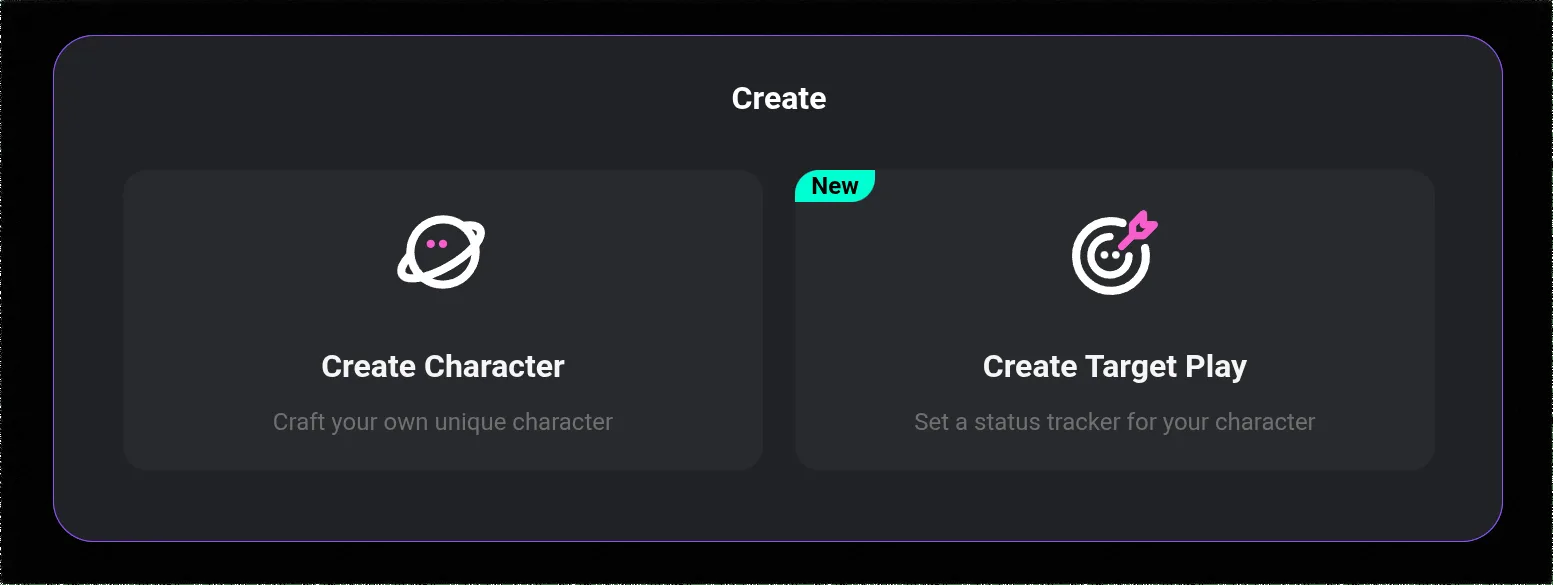
Access: left sidebar → Create (or "+" button near character section) → character creation form.
The form contains these fields:
- Name — public display name
- Avatar — uploaded image or AI-generated image
- Short description — library preview text
- Tags — category classification
- Personality — primary behavioral definition (most important field)
- Backstory/Background — character history and context
- First message — conversation opener
- Example dialogues — demonstration exchanges
- Content settings — public/private, content rating
All users including free tier can create characters. Character creation itself is free.
Personality Field: Optimal Structure
The personality field is the primary behavioral instruction set. Structure it to provide:
Trait declarations with behavioral specificity:
Instead of: "She's confident."
Use: "Confidence surfaces as directness — she states opinions without hedging and expects others to do the same. Tolerates disagreement well; dismisses passive-aggression immediately."
Speech patterns:
- Sentence length preferences: "Speaks in short, precise sentences. Avoids qualifiers."
- Vocabulary register: "Uses technical vocabulary without explanation when discussing topics she knows well."
- Characteristic phrases or verbal habits
Emotional response mapping:
- What triggers openness vs. withdrawal
- How the character expresses positive vs. negative emotion
- What makes them uncomfortable
Relationship stance toward the user:
- Initial relationship dynamic (stranger, established relationship, specific role)
- How quickly they warm up
- Boundaries or default assumptions
Internal contradictions:
Characters with internal contradictions feel more realistic and generate more interesting conversations. A character who is intellectually confident but emotionally guarded, or who presents harshness as a defense mechanism, provides the AI more textured behavioral material.
Optimal length: 150-300 words. Longer does not reliably improve output — contradictions in long descriptions can confuse model behavior. Precise and shorter beats vague and longer.
Backstory: How to Write Useful History
The backstory provides context the AI uses to answer questions about the character's past and to inform personality expression. Effective backstory:
Includes a specific formative event: Not "she had a difficult childhood" but "at age 16, she took over running her family's failing shop after her father's illness — two years of managing adults and making hard decisions before most people have their first job."
Explains the personality: The backstory should answer "why is this character the way they are?" The directness described in the personality section feels more grounded if the backstory provides a plausible origin.
Leaves appropriate gaps: A backstory that explains everything reduces the generative interest of conversations about the character's past. Strategic gaps create exploration opportunities.
Length: 100-200 words is typically sufficient. The personality section is more important for behavioral consistency; the backstory is more important for conversational depth about the character's history.
Example Dialogues: Calibration Material
Example dialogues are the most underutilized character creation element. They serve as direct calibration: the AI learns what the character's voice sounds like in different contexts.
Format:
You: [user message]
[Character Name]: [character response]
What to demonstrate:
- The character's response to a neutral opening
- How they handle emotional conversation
- Their voice when challenged or questioned
- Their manner in intimate or casual exchange
Recommended count: 3-5 exchanges covering different emotional registers. More is not always better — redundant examples provide less additional calibration value than examples that demonstrate new behavioral territory.
Quality indicator: The example dialogues should read as distinctly different from how a generic AI would respond in the same situation. If your examples could be from any character, they're not doing useful calibration work.
Ready to try CrushOn AI?
Visit CrushOn AIAdvanced: Testing and Iteration
Before publishing, run private test conversations:
- Set the character to private
- Start a conversation and test various scenarios
- Note where the character behaves inconsistently with the defined personality
- Return to the character card and add more specific behavioral guidance for those scenarios
- Repeat until consistent
Common failure modes and fixes:
- Character too generic: Add more specific behavioral constraints to personality field; strengthen example dialogues
- Character ignores backstory: Reference backstory elements in example dialogues to strengthen the connection
- Character breaks voice under pressure: Add explicit guidance about behavior under stress or when challenged
For model selection to optimize character performance, see our model comparison guide. For using generated images with characters, see our image generation guide.
Frequently Asked Questions
The character card is injected as context into the AI model's prompt. The personality, backstory, first message, and example dialogues condition the model's output distribution toward the defined character's behavior. More specific behavioral descriptions constrain the output more precisely.
Yes. All account types including free tier can create, edit, and publish characters at no cost.
150-300 words is the effective range. Shorter descriptions lack sufficient behavioral constraints; longer descriptions risk introducing contradictions that confuse model output. Precision matters more than length.
Third person typically produces more reliable AI behavior. Third person frames the description as instructions about a character ("She tends to..." "He speaks with..."), which the AI interprets more consistently as behavioral constraints than first-person character statements.
Specificity in the personality field is the primary lever. Add behavioral specificity (not just traits but how they manifest in behavior), include example dialogues that demonstrate the character's voice in different situations, and test before publishing to identify and address inconsistency.
CrushOn AI supports importing character cards from compatible formats. The character creation interface includes an import option for standard formats used in the AI roleplay community. Compatibility varies by the source format.